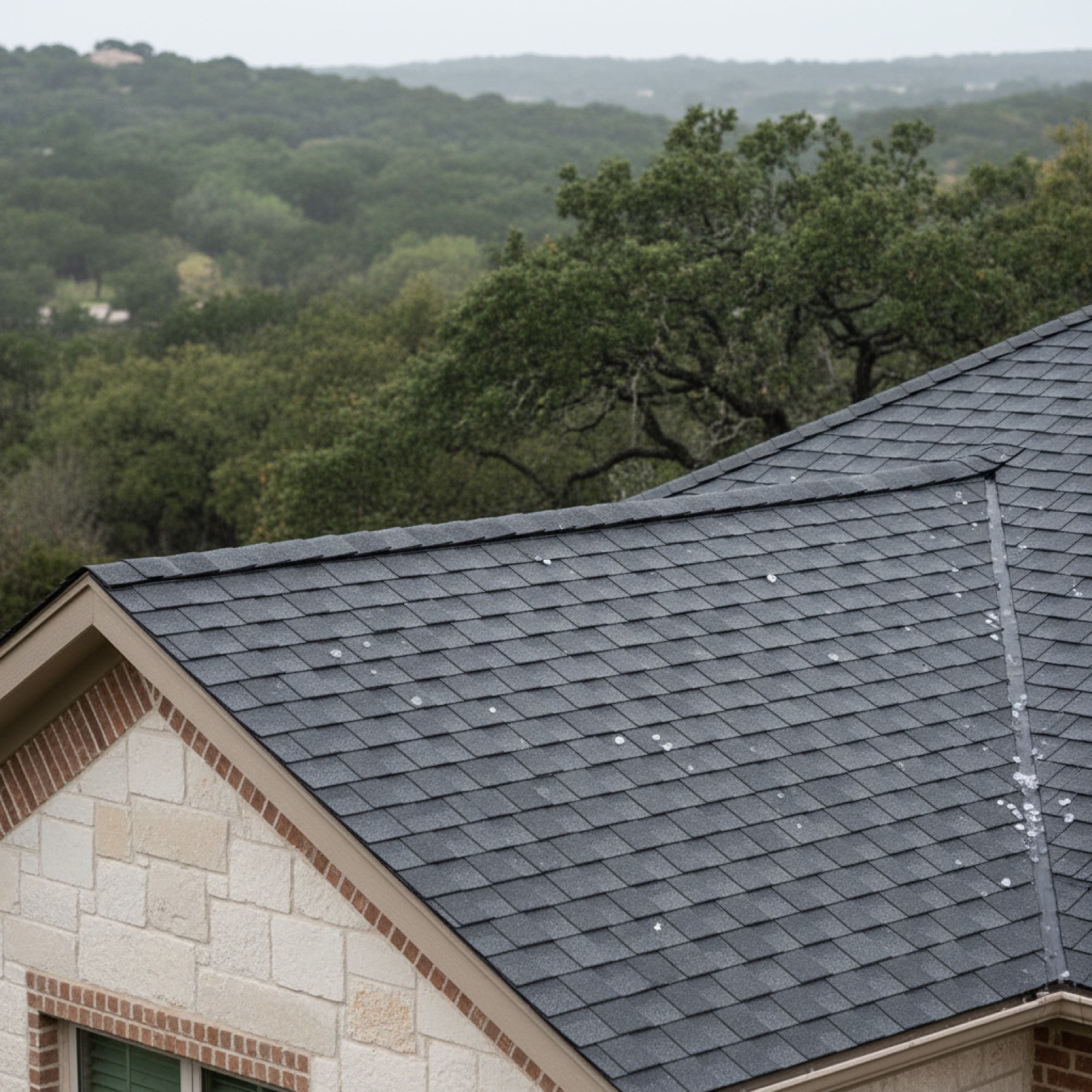
Class 4 shingles are the highest impact rating an asphalt shingle can earn, and for most Austin homeowners replacing a roof, they are worth the upgrade. They cost more up front than standard architectural shingles, but they hold up better to the hail that rolls through Central Texas every spring, and many Texas insurers offer a premium credit for roofs that carry the Class 4 label. This guide walks through what the rating actually means, what Class 4 shingles cost on a typical Austin home, how the insurance side works, and where the upgrade does and does not make sense.
We install roofs across Austin and the surrounding Hill Country, so the numbers and advice below come from the same conversations we have with homeowners at the kitchen table. If you are planning a roof before next storm season and want to know whether class 4 shingles fit your budget, this is a good place to start.
Key Takeaways
If you only have a minute, here is what matters most.
- A Class 4 rating under UL 2218 means a shingle sample withstood a 2-inch steel ball dropped from 20 feet without cracking, the toughest level in the standard.
- On a typical Austin home, Class 4 shingles run roughly $12,000 to $24,000 installed, compared with about $9,000 to $18,000 for standard architectural shingles.
- The Texas Department of Insurance notes that Class 4 roof coverings receive the highest premium credit, but each insurer sets its own discount amount.
- Not every impact-rated shingle performs the same in real hail, so the specific product and the installation both matter.
What Does a Class 4 Rating Actually Mean?
The rating comes from UL 2218, a lab test that drops steel balls of increasing size onto roofing samples. A shingle that survives a 1.25-inch ball earns Class 1. Each class steps up in size and drop height, and Class 4 is the top of the scale: a 2-inch steel ball dropped from 20 feet, twice on the same spot, with no crack in the shingle or the mat underneath.
That matters because hail damage on an ordinary shingle often starts as a bruise you cannot see from the ground. The granules loosen, the mat fractures, and the shingle starts to age faster from that spot. Impact resistant shingles are built with tougher mats, polymer-modified asphalt, or both, so they flex instead of fracturing when a hailstone lands.
Two points are worth knowing before you shop. First, the Class 4 label tells you how a product did in a controlled test, which is a useful baseline but not a guarantee. The Insurance Institute for Business and Home Safety runs its own hail ratings for impact-resistant shingles using lab-made hailstones, and its finding is blunt: not all impact-resistant asphalt shingles perform the same. Second, no shingle is hail-proof. Very large stones can still damage a Class 4 roof. The goal is fewer claims, less hidden damage, and a roof that keeps its full lifespan.
Why Does Impact Resistance Matter So Much in Austin?
Central Texas is hail country, and spring storm season brings repeated rounds of severe weather to Austin, Round Rock, Georgetown, and the Hill Country west of town. A single bad afternoon can leave entire neighborhoods filing claims, and roofers stay busy for months afterward.
Homeowners in the northern suburbs feel this most. If you live in Georgetown or along the 183 corridor, you have likely watched crews work their way down your street after a storm. Every replacement after a hail event is a chance to put something tougher on the house, and that is exactly when the Class 4 conversation comes up.
There is also the heat to consider. Austin summers bake asphalt roofs for months at a time, and that heat cycling makes standard shingles more brittle as they age. A brittle shingle cracks more easily when hail hits it. The polymer-modified shingles that earn a Class 4 rating tend to stay more flexible over time, which is part of why they make sense in a climate that combines long, hot summers with violent spring storms.
How Much Do Class 4 Shingles Cost Compared to Standard Shingles?
For a typical single-family Austin home, we see a Class 4 shingle roof land between about $12,000 and $24,000 installed, while standard architectural shingles on the same home run roughly $9,000 to $18,000. You can see the full planning ranges for every material we install on our Austin roofing pricing guide. Those are planning numbers only, and your actual price comes from an inspection.
On the same house, that usually works out to roughly a third more for the full project, and the final number is driven by a few specific factors:
- Roof size and pitch. Steeper Hill Country roofs take longer to install safely, and the material premium scales with the number of squares.
- The product line you choose. Impact resistant shingles cost more within each manufacturer’s lineup, and designer profiles cost more again.
- Decking condition. Rotted or delaminated decking has to be replaced before any shingle goes down, and nobody knows its condition until the old roof comes off.
- Flashing, ventilation, and penetrations. A premium shingle installed over tired flashing or poor attic ventilation will not deliver its full value, so we rebuild those details correctly.
- Whether insurance is involved. After a covered hail claim, some homeowners only pay the difference between a like-for-like roof and the Class 4 upgrade.
When you look at impact resistant shingles cost over the life of the roof, the comparison changes. A roof that avoids even one hail claim saves you a deductible, the hassle of a second replacement, and the risk of slow leaks from damage nobody caught. Add a possible insurance premium credit, and the upgrade often pays back a large share of itself.
Do Class 4 Shingles Lower Your Insurance in Texas?
They can, but the details vary by company. The Texas Department of Insurance explains that impact-resistant roofing may be eligible for insurance discounts, and that a Class 4 roof covering receives the highest premium credit of the four classes. The same page is clear that the discount for each class is set by each insurance company on a company-by-company basis, along with the testing and paperwork that company accepts.
In practice, that means the impact resistant shingles insurance discount is real but not automatic. Here is how to make sure you actually get it:
- Call your agent before the job starts. Ask whether your carrier offers a credit for Class 4 roofing, how large it is, and what proof they need.
- Keep the product documentation. Insurers generally want to see the manufacturer, product name, and the UL 2218 Class 4 label on the packaging.
- Ask about Form PC068. TDI publishes an Impact-Resistant Roofing Installation Form that the installing contractor completes. Some insurers use it and others have their own version, and we fill out whatever your carrier requires.
- Follow up after the roof is finished. Send the paperwork to your agent and confirm the credit appears on your next renewal.
Discount amounts swing widely between carriers, so treat any figure you hear from a neighbor as a rough guide. Your own agent is the only reliable source for your policy.
When Is the Upgrade Not the Right Call?
Most Austin homeowners replacing a roof benefit from the upgrade, but there are honest exceptions. If you plan to sell the house within a year or two, you may not keep it long enough to collect the insurance savings, although a Class 4 roof can still be a selling point. If your carrier offers little or no credit, the decision comes down to hail protection alone.
It is also worth comparing an impact-rated shingle roof with other premium materials. Standing seam metal and synthetic slate both carry strong impact ratings and much longer service lives, at a higher price. For homeowners who want the roof to outlast the mortgage, those can make more sense than any shingle. A full roof replacement consultation is the right time to put all three options side by side on your own home.
What Should You Expect When Installing a Class 4 Roof?
Installing impact resistant shingles looks much like any other replacement, with a few extra checks. On our jobs, a catch-all tarp system goes up along the sides of the house before tear-off, protecting siding, AC units, and landscaping. Crews remove the old roof down to the deck, replace any damaged decking, and rebuild flashing and ventilation before the new underlayment and shingles go down.
Because insurance credits depend on documentation, we photograph the product labels and keep the paperwork organized for you. The same Risner team member who walked your roof at the start stays your point of contact through the final walkthrough, so there is one person to call with questions about the roof or the insurance forms.
If your roof already took a hit this year, start with a damage inspection. Our storm damage and insurance restoration team documents the damage, works with your adjuster, and can price a Class 4 upgrade at the same time. Homeowners in Cedar Park, Leander, and the rest of the northwest suburbs often find this is the easiest moment to step up to a tougher roof.
Class 4 Shingles FAQ for Austin Homeowners
These are the questions Austin homeowners ask us most often about impact-rated roofing.
Are Class 4 shingles worth it in Austin?
For most Austin homeowners replacing a roof, yes. Central Texas sees frequent spring hail, and these shingles resist the bruising and cracking that shorten the life of standard shingles. On a typical home the upgrade runs roughly a third more than standard architectural shingles, and a possible insurance premium credit plus fewer hail claims can recover a meaningful share of that over time.
How long do Class 4 shingles last in Texas?
They are typically rated for 30 years or more, and the polymer-modified products tend to stay flexible longer in Texas heat than standard shingles. Real lifespan depends on attic ventilation, installation quality, and how many severe storms the roof sees, so proper flashing and ventilation matter as much as the shingle itself.
Can I add Class 4 shingles to only part of my roof?
Mixing products is not a good idea. Insurers generally want the entire roof covering to carry the Class 4 rating before they apply a credit, and different shingles weather at different rates, which leaves a patchwork look. If only one slope is damaged, a repair with matching material makes more sense, and a full Class 4 upgrade can wait for replacement.
Will my insurance pay for Class 4 shingles after a hail claim?
Most policies pay to replace your roof with materials of like kind and quality, so a standard shingle roof is usually replaced with standard shingles. Many homeowners choose to pay the difference to upgrade to Class 4 during a covered replacement. Ask your adjuster and agent how your policy handles upgrades before the work is scheduled.
If you are weighing a new roof before next hail season, schedule a free inspection with Risner Roofing and we will price Class 4 shingles alongside your other options, with flexible roof financing available if you want to spread out the cost.